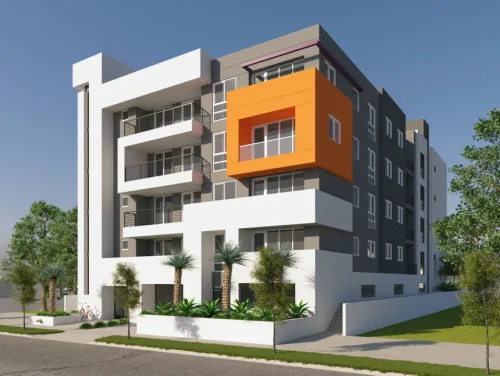
Affordable Housing vs. Real Affordability: Why the Two Aren't the Same Thing
There is a sentence you hear at almost every planning commission hearing in California: "This project doesn't include enough affordable housing."
It sounds unambiguous. It isn't. Because "Affordable Housing" — capital A, capital H — is a regulatory category defined by income formulas and deed restrictions. Affordability, lowercase, is something else entirely: whether an actual person can pay their actual rent and still afford groceries, childcare, and a car repair.
In California, those two concepts have drifted so far apart that we now routinely build projects that qualify as "affordable" but aren't, and block projects that would improve affordability but don't qualify. Understanding that gap is the single most useful thing a developer, business owner, or policymaker can do.
What "Affordable Housing" Technically Means
In regulatory terms, a unit is affordable when a household earning a specified percentage of Area Median Income (AMI) would pay no more than 30% of gross income on rent and utilities. The unit is then deed-restricted — legally locked to that rent level for a term, often 55 years.The standard income tiers:
That framework is coherent on paper. The problems start with the inputs.
Problem One: AMI Is a Blunt Instrument
AMI is set by HUD at the metro or county level — not the neighborhood level. In a region where wealthy enclaves and working-class communities share a county, the median gets pulled upward by incomes that have nothing to do with the neighborhood where the housing is actually being built.The practical consequence: in high-AMI California counties, an "80% AMI" affordable unit can be priced for a household earning well into six figures. That is a real household with real housing needs — but it is not the household most people picture when they hear "affordable housing," and it is not the household in the deepest distress.
Meanwhile the units that would serve a minimum-wage worker, a home health aide, or a retiree on fixed income sit at 30% AMI and below — the tier that is by far the hardest and most expensive to produce.
Problem Two: The 30% Rule Is a Historical Accident
The 30%-of-income benchmark traces back to mid-century federal policy, not to any modern analysis of household budgets. It treats a household earning $40,000 and one earning $140,000 as though the same percentage means the same thing.It doesn't. What matters is residual income — what's left after rent. A household paying 35% of a high income may be comfortable. A household paying 29% of a very low income may still be choosing between a prescription and a utility bill. A single ratio cannot capture that, yet the entire regulatory apparatus is built on it.
It also ignores transportation costs. A "cheaper" unit forty miles from work often costs the household more in total once commuting is counted — and produces worse outcomes for everyone.
Problem Three: Deed-Restricted Units Are Extraordinarily Expensive to Build
Here is the fact that reframes the entire debate: in much of California, delivering a single deed-restricted affordable unit costs $600,000 to over $1 million in total development cost.Why:
None of these are inherently illegitimate. But the arithmetic is unforgiving: at those per-unit costs, subsidized production alone will never close a shortfall measured in millions of homes. There is no plausible budget in which it does.
Problem Four: Inclusionary Requirements Cut Both Ways
Inclusionary zoning — requiring a percentage of below-market units in market-rate projects — is politically popular and intuitively appealing. It also functions economically as a tax on housing production.Set the requirement well, and it produces genuinely affordable units at modest cost to feasibility. Set it too aggressively, and projects stop penciling entirely. The result is a familiar and perverse outcome: a high affordability percentage on zero units built.
We have watched proposals die this way. The affordability requirement was, on paper, excellent. The building was never built. Nobody was housed at any income level.
What Actually Drives Real Affordability
If deed-restricted production can't carry the load alone, what does? The evidence is consistent, if unglamorous.Total supply, at every price point
Adding housing at any price level reduces pressure across the whole market. When new market-rate units absorb high-income demand, those households stop outbidding everyone else for older, cheaper housing. Restrict supply and the opposite happens — high earners compete downward, and the people at the bottom lose that competition every single time.Filtering, and protecting the housing that already filters
Most genuinely affordable housing in America was never built as "Affordable Housing." It is older market-rate stock that became affordable as it aged — naturally occurring affordable housing. It is also the stock most vulnerable to demolition, luxury conversion, and deferred maintenance. Preserving it is often cheaper per household served than building new subsidized units.Time and entitlement risk
Every month a project spends in discretionary review adds carrying cost that lands in the rent. Approval delay is not a neutral procedural matter — it is a direct, compounding input into housing prices. This is precisely why we support objective design standards and streamlined ministerial approval: predictability is an affordability tool.Building type and construction cost
Much of California's most affordable historic housing — small multiplexes, courtyard apartments, single-stair walk-ups — is illegal to build today under current codes and zoning. Re-legalizing modest, simple, cheap-to-build housing types would lower costs without a dollar of subsidy.Fees
Impact fees in some California jurisdictions exceed $100,000 per unit. Those costs do not vanish into the ether; they are capitalized into rents and prices, or they kill the project. Fee structures that are flat per unit also punish small units most — taxing exactly the housing type most likely to be affordable.The Position We Actually Hold
We want to be precise here, because this debate is usually flattened into two bad caricatures.Deep subsidy is necessary and not optional. Households at 30% AMI and below cannot be served by any unsubsidized market, in any city, under any regulatory regime. Vouchers, LIHTC, public investment, and permanent supportive housing are not failures of the market — they are the correct instrument for that population, and they are chronically underfunded.
And subsidy cannot be the whole strategy. At $600K-$1M per unit, it is arithmetically incapable of resolving a multi-million-unit shortage. Treating "how many affordable units did you include?" as the only relevant question — while entitlement delay, fee loads, and prohibited building types quietly determine whether anything gets built at all — is how a state ends up with excellent affordability policy and a catastrophic housing shortage simultaneously.
Both things are true. Policy that pretends otherwise, in either direction, fails the people it claims to serve.
Questions Worth Asking
When you next encounter an affordability claim — in a staff report, a press release, or a hearing — the useful questions are:The Bottom Line
"Affordable Housing" is a category. Affordability is an outcome. Conflating them lets everyone involved claim progress while rents keep climbing.Real affordability comes from a boring, unsatisfying combination: abundant supply across all price points, deep subsidy targeted at the households markets genuinely cannot serve, preservation of the older stock already doing the work, and the removal of cost and delay we impose on ourselves through process.
The uncomfortable truth is that California's affordability crisis is not primarily a failure of intention. It is a failure of arithmetic — and arithmetic is indifferent to how strongly anyone feels about it.
For more on the approval mechanics that shape project feasibility, see our guides on objective design standards and the Conditional Use Permit process.